


By Jeff Fabré
An $11 television commercial, a Macintosh G4, and a piece of sheetrock that survived the early Internet
For more than twenty-five years, I never said anything publicly about this.
I didn’t put it in a portfolio. I didn’t resurrect it when YouTube arrived. I never posted it to LinkedIn as evidence that I had somehow been ahead of my time, and it never became part of the professional biography I told about myself. Every once in a while, I would run into somebody who had been there, and we would remember some absurd detail—the commercials, the parties, Teddy in the bathtub—and laugh. Then we would go back to our lives.
What brought it all back was a piece of sheetrock.

At some point in 2000, I had cut an article out of City Pages and glued it to a scrap of drywall I apparently had lying around. The thing followed me for a quarter century, eventually ending up among the accumulated objects in my garage. The headline was “Net Free Nader.” I started reading, and then I started remembering.
I was thirty-three years old. My girlfriend was pregnant. We lived on Emerson Avenue in Uptown Minneapolis, where part of my production operation had overtaken our domestic space: CRT monitors, tangled cables, video equipment, lights, and a Macintosh computer. In one photograph from the period, I am sitting there holding a spiral-bound sketchpad with JFS Productions written across it by hand.
The technology looks ancient now, but at the time, it felt like the future. I wasn’t thinking about the democratization of media, nor was I trying to invent a new communications model. I simply needed my career to work. I wanted to make something people would notice, and new technology had suddenly made that possible in ways that had been impractical—or simply too expensive—only a few years earlier.
Minneapolis at the turn of the millennium
There was something about Minneapolis in that period. The boundaries between advertising, independent media, filmmaking, art school, music, politics, and nightlife were unusually porous. City Pages was still a consequential alternative weekly, and the Warehouse District retained enough roughness that artists, filmmakers, and production companies could improvise there. Agencies, post houses, photographers, musicians, and political operatives moved through constantly overlapping circles.
Bill Hillsman was central to that atmosphere. His unconventional political advertising had already made him a creative figure well beyond electoral politics, known for resisting formulaic strategy through high-profile campaigns for Paul Wellstone and Jesse Ventura. In December 1999, he gave the winter commencement address at the Minneapolis College of Art and Design, and the school gave him a letter jacket as a gift for doing it. I had no reason to imagine that jacket would reappear in my life twenty years later.
By the following year, Hillsman was working with Ralph Nader. Around the same time, I had fallen in with a small Minneapolis group called the Contra Club.
The politics mattered, certainly, but probably not in the tidy way political identities get reconstructed in hindsight. I was surrounded by artists, filmmakers, and politically engaged people; some of what interested them interested me, but much of it was just the social gravity of being young and wanting to be where things were happening. What interested me most consistently was making things.
Eleven dollars
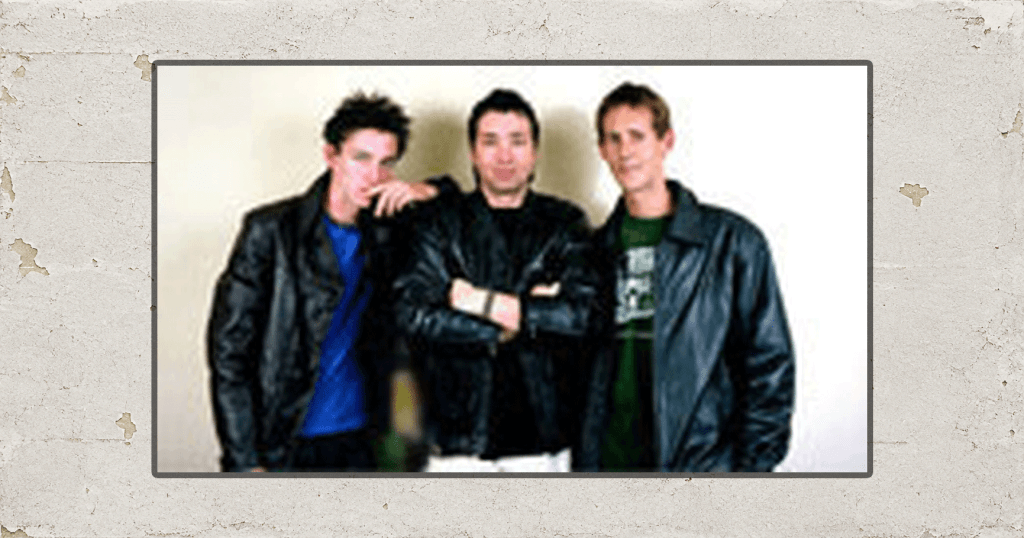
On October 4, 2000, City Pages writer Paul Demko published “Net Free Nader,” documenting what the Contra Club had been up to. The article identified photographer Teddy Maki, cinematographer Stephan Cole, and me as the core of the group—describing me as a filmmaker and, somewhat accurately, the organization’s “instigator in chief.”
We had produced a thirty-second television commercial connected to Nader’s presidential campaign. It cost approximately eleven dollars: ten dollars bought a MiniDV cassette, and one dollar bought a tie at Ragstock for the dark-suited character I played, a kind of anonymous establishment enforcer we called “The Man.”
We worked out the script over pitchers at Pizza Lucé in downtown Minneapolis, shot the commercial the following day on digital video, and edited it on a Macintosh G4. Then I spent almost five hundred dollars getting people to see it.
“It tapped me out,” I told Demko.
That stark difference—eleven dollars to make something, nearly five hundred dollars to distribute it—is what interests me now. Production was becoming cheap; attention was not.
A digital commercial that still needed a physical tape
The commercial had been created with emerging digital technology, but television still belonged to an older industrial system. The cable station couldn’t simply take my MiniDV master, so I took the finished piece to CRASH+SUES, the Minneapolis post-production house, where it was transferred to Betacam. Then I physically delivered the broadcast tape across town to the cable operation.
Shoot on MiniDV. Edit on a G4. Transfer to Betacam. Carry the tape across town. Buy the airtime. It is difficult to imagine a cleaner snapshot of a technological transition.
The City Pages article reported that the commercial aired twenty-nine times over forty-eight hours on cable channels including MTV, Comedy Central, and FX. The Time Warner Cable system carrying the spots served roughly 200,000 Twin Cities subscribers, though only a fraction would have been watching any particular channel at those hours.
There was another detail in Demko’s article that I had completely forgotten: none of us had cable television. We were, as I told him, “all too broke.” To watch the commercial we had just paid to put on television, we had to go to a friend’s house who actually subscribed.
Twenty-six years later, that seems less like a joke than an accurate description of what technology was doing. Three people who couldn’t afford cable had acquired enough production capability to place their own work onto cable television. The expensive infrastructure had not disappeared; the constraint had simply moved.
The Internet could carry the file
We also put the commercials on the web. There was no YouTube yet; they existed merely as video files that people could download from the Contra Club website. I built the site in HTML and uploaded the files via FTP. ContraClub.org was the public address, while the actual site lived on server space supplied with my personal Internet account.
The distinction between the web and a platform is easy to forget today. The Internet could move our file from one computer to another, but what it could not yet reliably provide was an audience. Television could do that—so we used both.
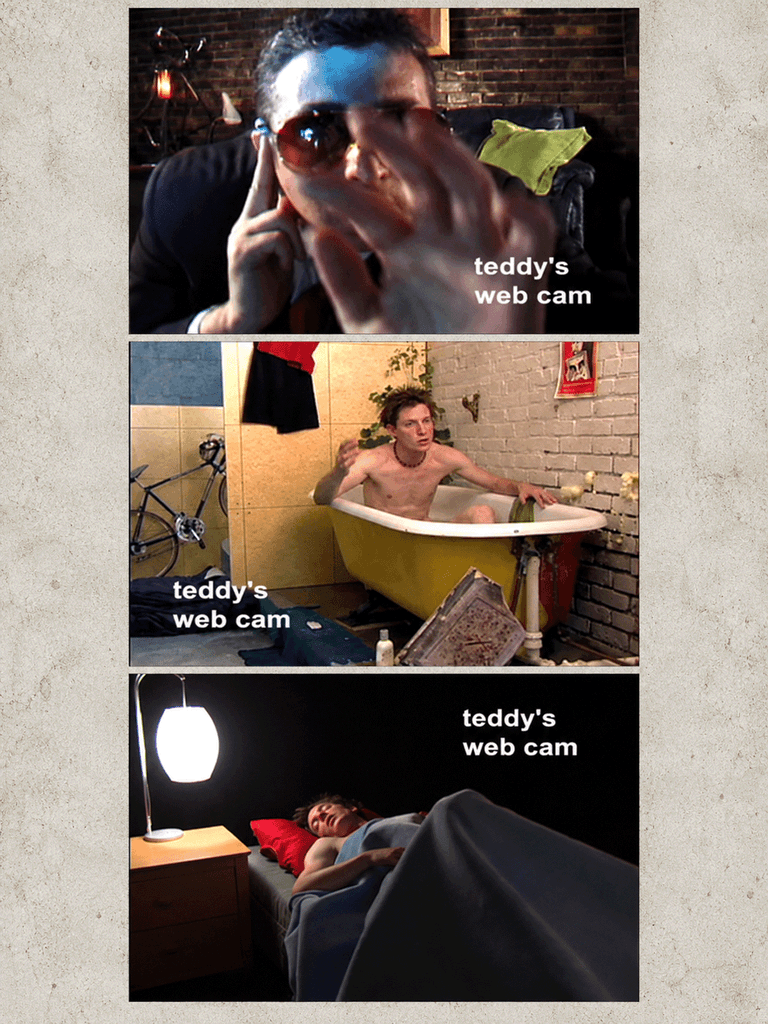
Once the first commercial began attracting attention, we made another. The second featured Teddy naked in a bathtub, arguing his case directly to the camera before “The Man” appeared again to shut him down. More episodes were contemplated, and we tried to extend our distribution.
Airtime required money, so we held parties at our brick-walled Warehouse District studio, across from the Monte Carlo. DJs played, people drank, and money was raised. The money became television. By the time City Pages wrote about the project, we had assembled almost $1,000 to buy fifty cable spots in Chicago timed around another Nader appearance. Then Stephan Cole and I built a section of the website encouraging people elsewhere to download the commercials and purchase local airtime themselves.
Seen from 2026, some of that behavior looks strangely familiar. Yet it would be easy to overstate the comparison: we didn’t invent crowdfunding, online video, or decentralized media, and we certainly weren’t sitting around a Macintosh G4 forecasting YouTube, social media, or the creator economy.
I was just trying to get noticed. My girlfriend was pregnant, I felt pressure to become successful, and I wanted to hit something out of the park professionally. But pursuing that immediate goal forced us to solve a sequence of problems created by a media system changing faster than its infrastructure. The production tools had arrived before the platforms that would eventually connect everything.
Sometimes the behavior appears before the platform that makes it easy.
What would you do with this?
The City Pages article mentioned Hillsman directly, noting that the Contra Club members openly admired his work while he was consulting for the Nader campaign. Bill and I subsequently became friends. Eventually we became golfing buddies and collaborated on a few projects. I remember an occasion when I sat in his office and he laid out a campaign or some undefined communications problem, asking a remarkably uncomplicated question: What would you do with this?
I understand better now why that question appealed to me. It does not prescribe a profession; it doesn’t ask what an advertising agency, a filmmaker, a media buyer, a web developer, or a political consultant would do. It asks what the problem itself requires.
Where is the constraint? What has become unnecessarily expensive? What has technology changed? Which part of the old system are we preserving simply because that is how it used to be done?
I doubt I would have articulated any of that in 2000. I was simply doing it.
Then I found the sheetrock
Finding that old article sent me online looking for things I had never bothered to search for before. Almost twenty-six years had passed. The original City Pages link was gone from the live web, but I eventually found an archived version in the Wayback Machine. Then pieces of the old Contra Club website began turning up.
One image stopped me: a site I had designed nearly twenty-six years earlier featuring a photographic filmstrip surrounding a blurred nighttime highway, red taillights stretching through the frame, the ContraClub.org address, and the handwritten words making a difference. I had completely forgotten what it looked like, and I was surprised to find that I still liked it.
We have a peculiar belief that the Internet remembers everything. It doesn’t. Domains expire, hosting companies disappear, servers are decommissioned, file formats become obsolete, and search engines stop surfacing old directories. Entire eras of the early web become nearly invisible.
Most of this project disappeared digitally. What survived was the paper—more precisely, a newspaper article that a younger version of me had cut out with scissors and glued onto a spare piece of sheetrock. There is something appropriate about that: a project built around emerging digital media came back to me because I had kept the physical newsprint.
Even the city changed
Almost everything surrounding the story is different now. The G4 is gone. MiniDV and Betacam are gone. So is the little allotment of ISP server space where the website once lived. The website exists mainly as fragments, and City Pages itself ceased publication years ago.
Even Minneapolis is different. The Warehouse District where we shot the commercial and threw the parties belongs to another version of the city now. The particular mixture of art school culture, alternative newspapers, small production houses, advertising, politics, and nightlife belonged strictly to that moment.
People moved on and careers developed. JFS Productions evolved and was eventually rebranded as Fabré Agency, and I moved on with it. For more than twenty-five years, this story existed mostly as a shared memory between the people who had actually been there.
Then another old artifact acquired a different meaning. Around twenty years after that 1999 MCAD commencement, my daughter was attending MCAD herself. Bill Hillsman heard about it, dug out the letter jacket the school had given him when he delivered his address, and gave it to me for her.

There is a temptation, when writing about the past, to make everything look inevitable after the fact—to turn accidents into strategy and youthful improvisation into a carefully plotted origin story. That would ruin this one.
I remember the pressure far more than any foresight. I remember wanting a career, an apartment full of editing gear, a pregnant girlfriend, a one-dollar tie from Ragstock, pitchers at Pizza Lucé, MiniDV tapes, parties across from the Monte Carlo, hauling a Betacam cassette to a cable station, and simply trying to make something interesting enough that people would pay attention. There was no grand plan connecting any of it to twenty-six years later.
Looking at that young man sitting in the Emerson Avenue South apartment holding a sketchpad with JFS Productions written on it, I recognize the way he approached the problem. The technology changed, the platforms changed, the city changed, and even the people became older versions of themselves. What survived was the instinct to ask what the new tools had made possible—and then to try it, long before there was a button, a platform, or a business model designed to make the answer obvious.
And somehow, what brought it all back was not a server, a hard drive, or an old MiniDV cassette.
It was a newspaper clipping glued to a piece of sheetrock in my garage.


